
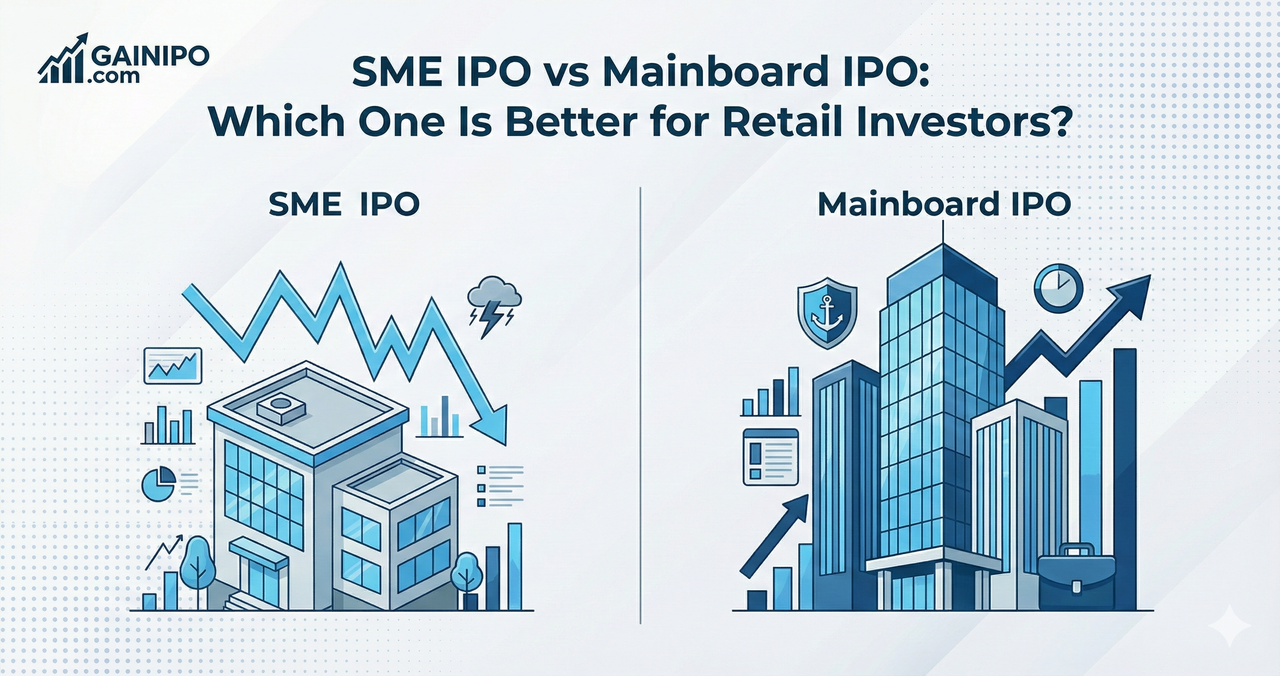
SME IPO vs Mainboard IPO: Which One Is Better for Retail Investors?

Introduction
Many retail investors apply in IPOs without realizing one critical thing:
Not all IPOs are the same.
Some IPOs are listed on the Mainboard, while others are listed on the SME platform.
Both can give profits.
Both can cause losses.
But the risk, liquidity, and behaviour of SME IPOs and Mainboard IPOs are completely different.
In this guide, you’ll clearly understand:
- What is an SME IPO and Mainboard IPO
- Key differences that retail investors must know
- Why SME IPOs look attractive but are risky
- Which IPO type suits which kind of investor
What Is a Mainboard IPO?
A Mainboard IPO is an IPO of a medium to large company listed on:
- NSE Mainboard
- BSE Mainboard
These companies usually have:
- Higher revenue
- Larger issue size
- Strong institutional participation
- Wider public visibility
Examples include large consumer, tech, finance, or manufacturing companies.
What Is an SME IPO?
An SME IPO is launched by small or growing companies and is listed on:
- NSE SME platform
- BSE SME platform
SME IPOs are designed to help smaller companies raise capital and access public markets.
They usually have:
- Small issue size
- Limited public float
- Higher volatility
- Lower liquidity
SME IPO vs Mainboard IPO – Key Differences
1️⃣ Issue Size
- Mainboard IPO: Large (₹500 crore to ₹10,000+ crore)
- SME IPO: Small (₹5 crore to ₹100 crore)
Smaller issue size means lower liquidity in SME IPOs.
2️⃣ Minimum Investment (Lot Size)
- Mainboard IPO: Usually ₹14,000 – ₹15,000
- SME IPO: Can be ₹1 lakh to ₹2.5 lakh or more
This makes SME IPOs less accessible for small retail investors.
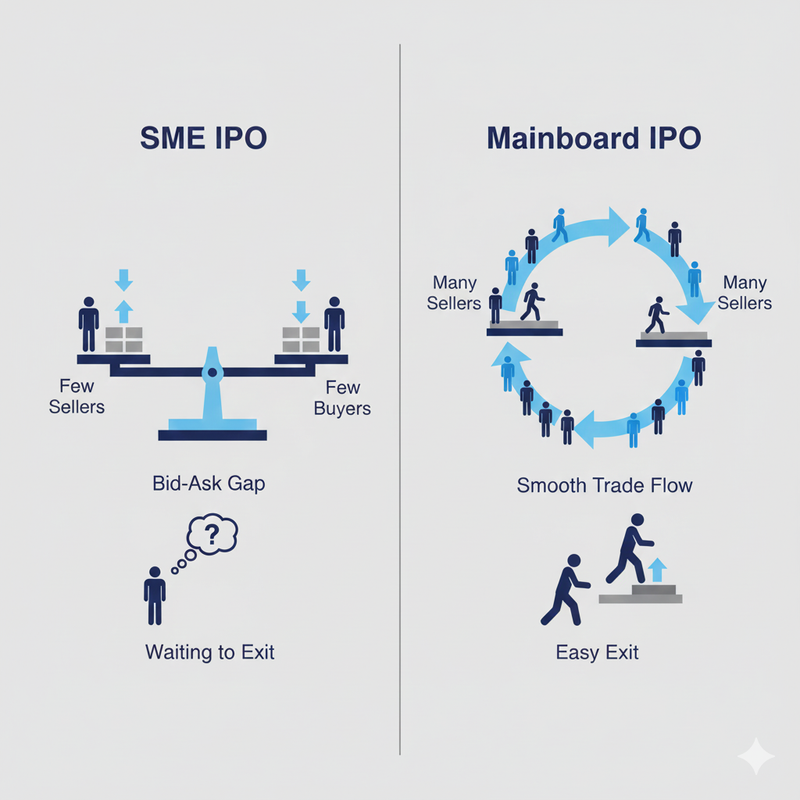
3️⃣ Liquidity After Listing
This is the biggest difference.
-
Mainboard IPO:
- High daily volumes
- Easy to buy & sell
- Narrow bid-ask spread
-
SME IPO:
- Very low trading volume
- Difficult exits
- Wide bid-ask spread
Many SME investors get stuck after listing.
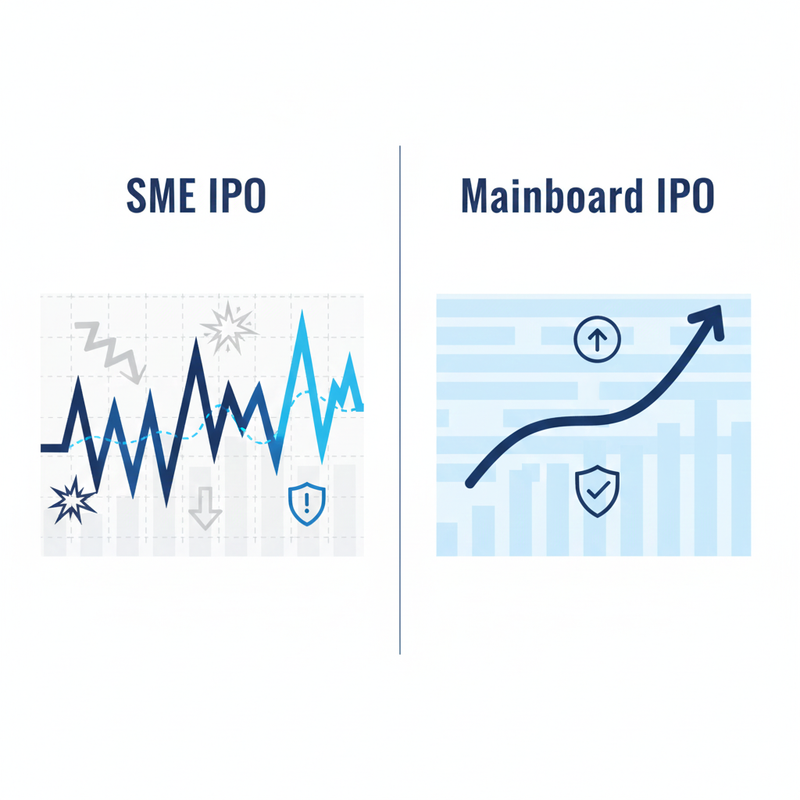
Volatility & Circuit Limits
-
Mainboard IPO:
- 10%–20% circuit limits
- More stable price movement
-
SME IPO:
- 5% or even 2% circuit limits
- Can hit upper circuit for days
- Can also hit lower circuit for days
This makes SME IPOs high-risk, high-reward.
Institutional Participation
-
Mainboard IPOs:
- Strong QIB participation
- Mutual funds, FIIs involved
-
SME IPOs:
- Very limited institutional interest
- Mostly retail & HNI participation
Lack of institutional support increases post-listing risk.
GMP Behaviour in SME vs Mainboard IPOs
SME IPO GMP often looks very attractive:
- 50%
- 80%
- Even 100%+
But remember:
- SME GMP is based on very thin trading
- Prices can reverse sharply after listing
Always cross-check GMP from reliable data sources like
Live GMP Today.
Allotment Chances
-
Mainboard IPO:
- Retail allotment often via lottery
- Lower probability in big IPOs
-
SME IPO:
- Fewer applications
- Sometimes better allotment chances
But higher allotment does not mean safer investment.
You can check allotment results here:
IPO Allotment Status
Who Should Invest in SME IPOs?
SME IPOs may suit investors who:
✔️ Can invest higher capital
✔️ Understand liquidity risk
✔️ Can hold for long term
✔️ Can tolerate sharp price swings
SME IPOs are not recommended for beginners.
Who Should Prefer Mainboard IPOs?
Mainboard IPOs are better for:
✔️ Beginners
✔️ Low-risk investors
✔️ Listing gain seekers
✔️ Investors who want easy exit
They are more transparent and less volatile.
SME IPO Risks Retail Investors Ignore
❌ Getting stuck due to low liquidity
❌ No buyers after listing
❌ Sudden lower circuits
❌ Over-dependence on GMP
❌ Limited business information
Before applying, always understand IPO risks:
IPO Risks Every Retail Investor Should Know
Can SME IPOs Be Converted to Mainboard?
Yes.
Some SME companies later migrate to the mainboard after:
- Meeting profitability criteria
- Achieving scale
- Regulatory approvals
But this process takes years, not months.
Conclusion
SME IPOs and Mainboard IPOs are not competitors — they serve different investor profiles.
Quick Summary
- SME IPO = High risk, low liquidity, high volatility
- Mainboard IPO = Lower risk, higher liquidity, stable
For most retail investors, Mainboard IPOs are safer.
SME IPOs should be approached with full knowledge, not hype.
At GAINIPO, we help retail investors understand IPOs deeply — not just chase GMP numbers.