

IPO Risks Every Retail Investor Should Know Before Applying (2025 Guide)
Introduction
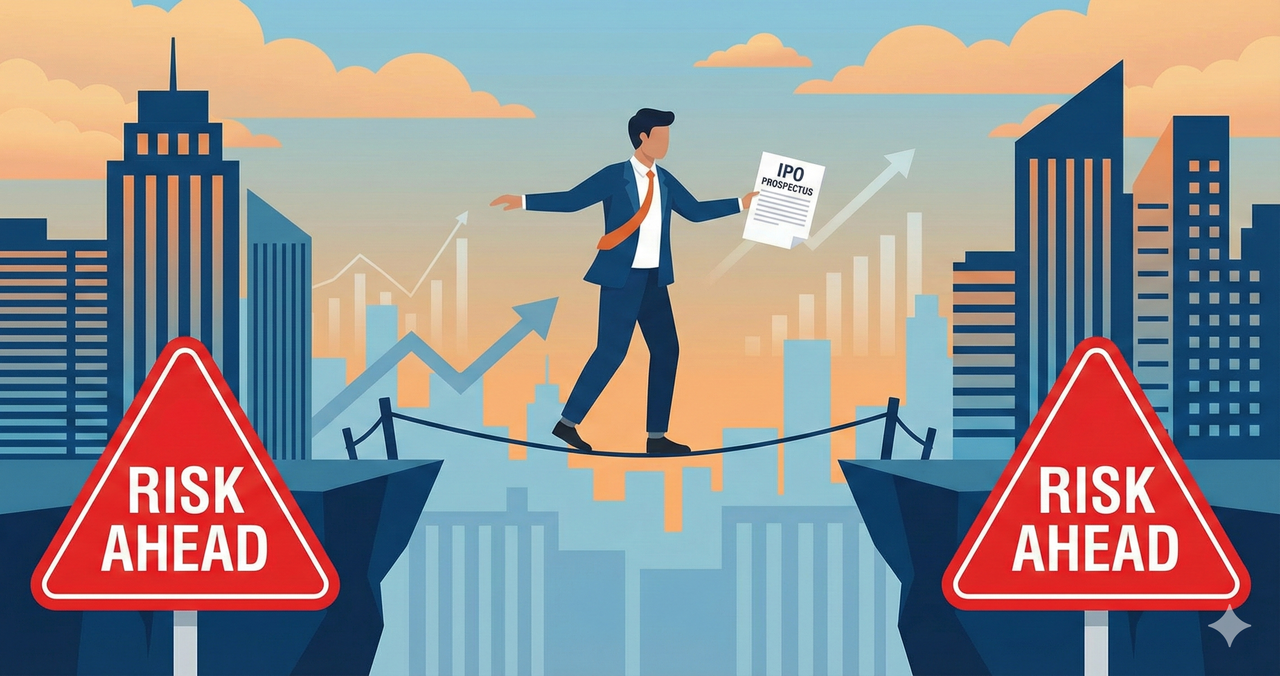
Most new investors believe IPOs always list at a premium.
But the truth is: IPOs have risks that many retail investors never notice.
Even highly hyped IPOs can:
- List at a discount
- Fall sharply after listing
- Lose value despite oversubscription
- Perform opposite to GMP expectations
In this guide, we explain all major IPO risks in simple language, with real Indian examples — including the famous Paytm IPO crash.
If you're a retail investor applying via UPI/ASBA, this guide will protect you from common mistakes.
1. Listing Risk: The Biggest and Most Ignored Risk
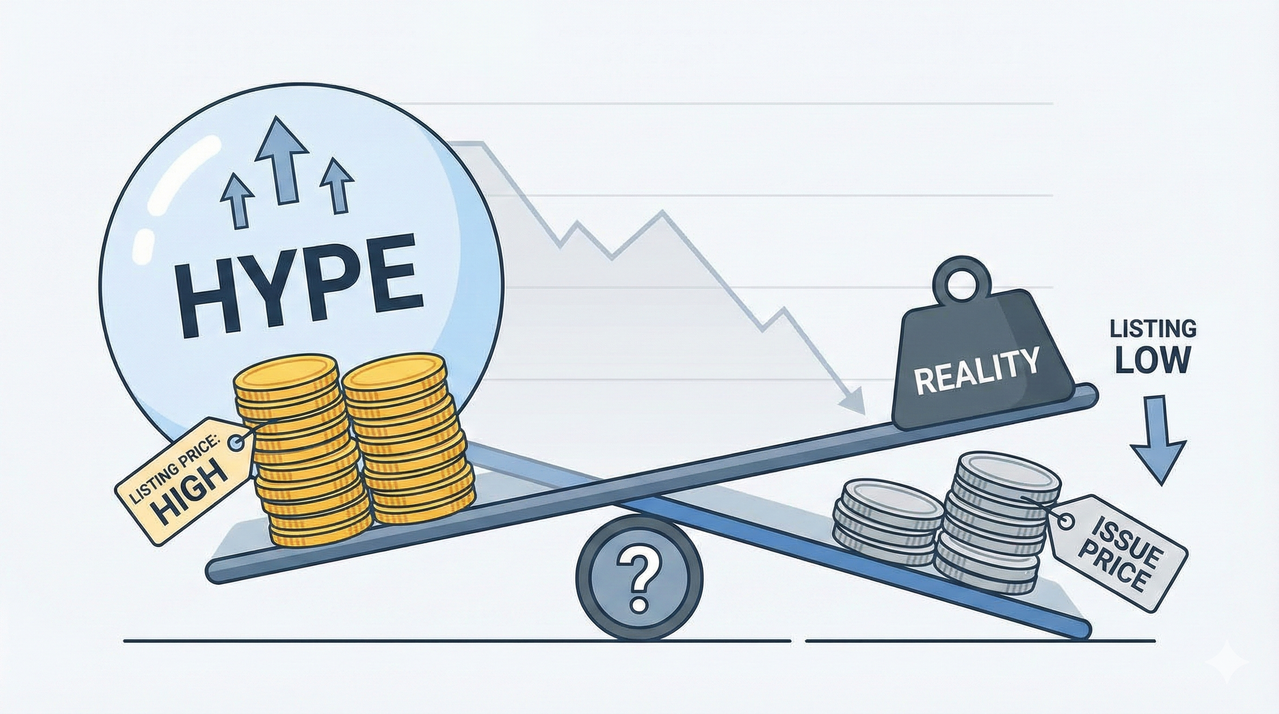
Even if an IPO is hyped, it can still list below its issue price.
📌 Why it happens:
- Global market weakness
- FII selling pressure
- Weak subscription in QIB/HNI
- Wrong valuation
- Market sentiment turning negative overnight
📉 Real-Life Example: Paytm IPO (2021)
(As requested, adding real example)
- Issue Price: ₹2,150
- Grey Market Sentiment: Neutral
- Huge publicity and hype
- Expected to list flat to mildly positive
But it listed at a 9% discount and fell more than 25% on day one.
Retail investors who applied blindly faced immediate losses.
2. Overvaluation Risk (Most Common Reason for IPO Failure)
When a company demands a price higher than its financial worth, the IPO becomes risky.
Signs of overvaluation:
- PE ratio much higher than peers
- Negative earnings but premium pricing
- Aggressive marketing campaigns
- Weak financials hidden behind buzzwords
Why this matters:
A company may be great, but if valuation is unrealistic, post-listing price usually corrects downward.
3. GMP Trap Risk (Grey Market Misleading Retail Investors)
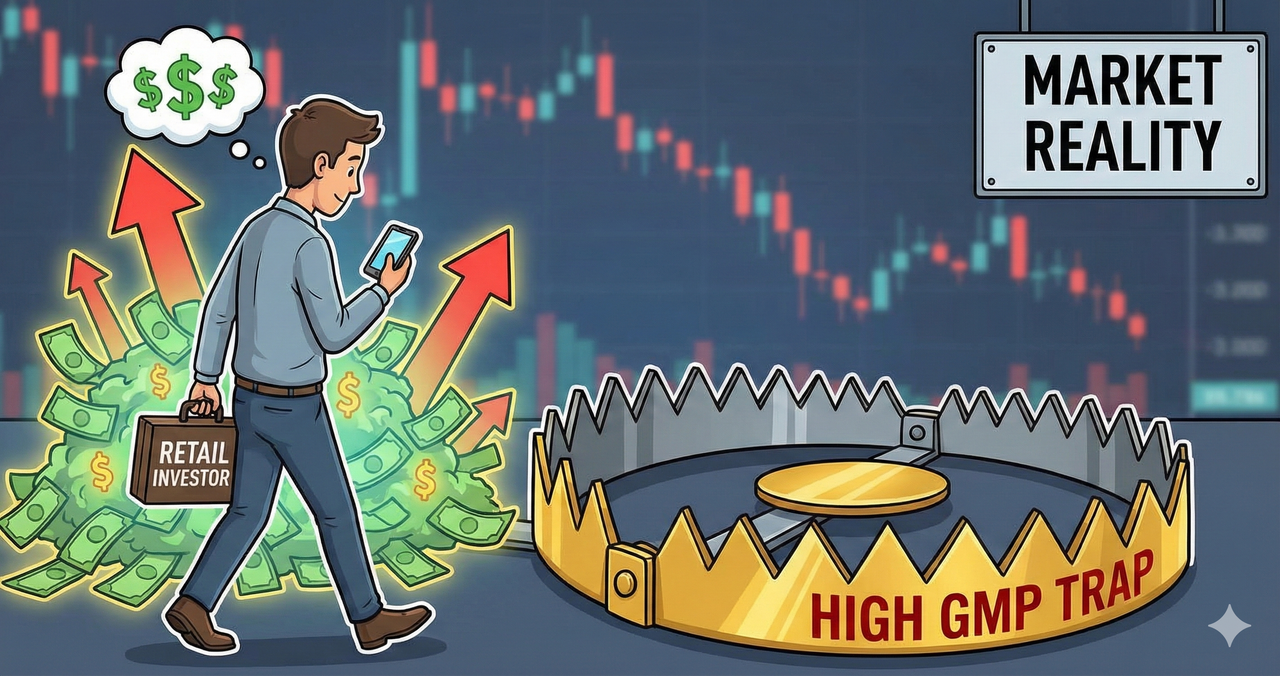
GMP (Grey Market Premium) shows sentiment, not truth.
Many retail investors make the mistake:
“GMP high hai, apply kar deta hoon.”
Why GMP can be risky:
- It changes daily
- Operators manipulate it
- It may fall before listing
- GMP is unregulated
- Some dealers artificially pump it
Sometimes IPOs with positive GMP list at a discount, shocking new investors.
To avoid this trap:
👉 Track GMP from reliable sources only: https://gainipo.com/gmp-today
4. Allotment Risk (Low Probability in Oversubscribed IPOs)
Many retail investors believe:
“Maine apply kiya hai, allotment mil hi jayega.”
But in highly subscribed IPOs, retail allotment probability can fall to 1–3%.
Why?
Because SEBI uses a lottery allocation:
- If demand > supply
- All eligible applicants get equal chance
- Not everyone gets shares
This is not a financial risk, but a probability risk — your investment plan may fail if you rely on allotment.
To calculate chances:
👉 Use GAINIPO Allotment Probability Calculator.
5. Lock-In Risk for HNI & Pre-IPO Investors
If you track IPO fundamentals, you must also track:
- Anchor investor lock-in expiry
- Pre-IPO investor lock-in expiry
Why?
When lock-ins expire, early investors may sell in bulk, causing:
- Sudden selling pressure
- Price fall after listing
Retail investors who buy IPO shares on listing day often get affected.
6. Business Model Risk (Not All IPO Companies Are Strong)
Some companies go public even when:
- Their business model is weak
- Profits are unstable
- Cash flow is negative
- Industry future is unclear
A strong brand name does NOT guarantee a good investment.
Example risks:
- Tech IPOs burning cash
- Loss-making startups
- Seasonal businesses
- Over-concentrated revenue (1–2 clients)
Always check DRHP.
7. Post-Listing Volatility Risk
After listing, price can:
- Jump 20–40%
- Crash 20–40%
- Move unpredictably due to traders & institutions
New investors often buy at the peak on listing day and then face immediate losses.
8. Liquidity Risk in SME IPOs
SME IPOs carry additional risks:
- Lower liquidity
- Higher volatility
- Wider circuit limits
- Limited institutional participation
A stock can:
- Hit upper circuit for days
- Then reverse and hit lower circuit
Retail investors get trapped due to low liquidity.
Conclusion
IPOs can give fantastic listing gains.
But they also carry hidden risks that retail investors often ignore.
To avoid losses:
✔️ Never apply blindly
✔️ Read DRHP summaries
✔️ Check valuations and peers
✔️ Track subscription
✔️ Check reliable GMP updates
✔️ Avoid hype & emotional decisions
With proper awareness, you can make IPO investing safer, smarter, and more profitable.
GAINIPO helps you with clean, updated, beginner-friendly tools to stay ahead.