
IPO Allotment Process Explained: How Shares Are Allotted to Retail Investors in India
IPO Allotment Process Explained: How Shares Are Actually Allotted in India
Introduction
One of the most frustrating moments for any retail investor is this:
“IPO 50x subscribed tha, fir bhi allotment nahi mila.”
You applied on time.
UPI mandate was approved.
Money was blocked.
Still — no shares allotted.
This guide explains exactly how IPO allotment works in India, why oversubscription reduces your chances, and what really happens behind the scenes — in the simplest way possible.
What Is IPO Allotment?
IPO allotment is the process by which shares of a company are distributed to investors after the IPO closes.
Once bidding ends:
- The registrar collects all applications
- Invalid or duplicate bids are removed
- SEBI allotment rules are applied
- Shares are allotted category-wise
Only after allotment:
- Shares are credited to your demat account
- Or blocked funds are released back to your bank
You can track real-time IPO activity and market sentiment from our Live GMP Today page.
IPO Investor Categories (Very Important)
IPO shares are not distributed randomly.
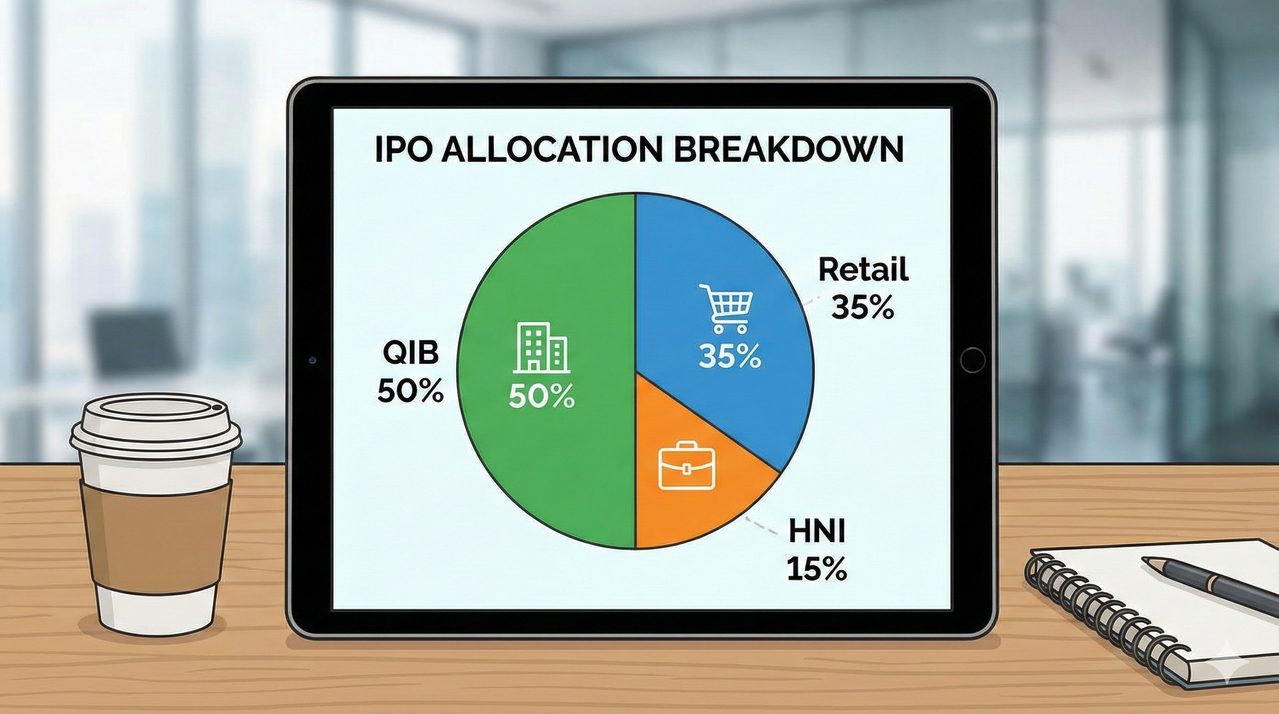
They are reserved category-wise as per SEBI norms:
- QIB (Qualified Institutional Buyers) – ~50%
- NII / HNI (Non-Institutional Investors) – ~15%
- Retail Investors – ~35%
This means retail investors compete only with other retail investors, not with big institutions or funds.
Retail IPO Allotment Rule (Key Concept)
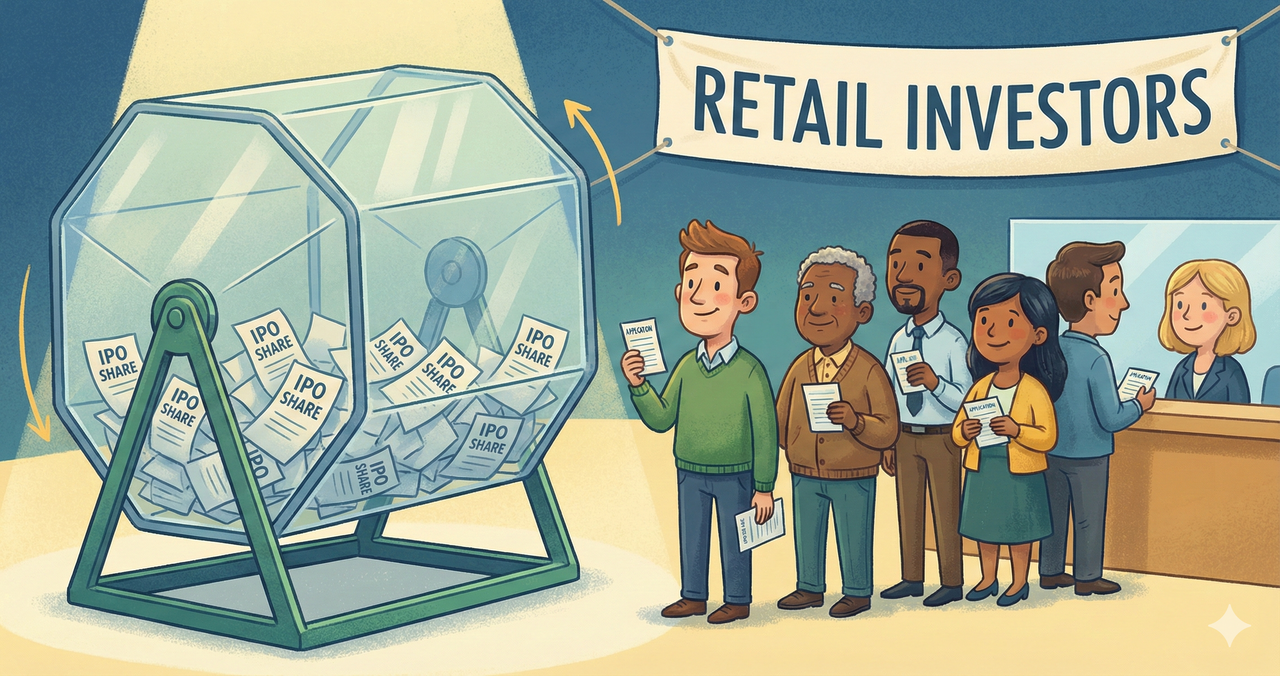
SEBI follows a fair and transparent lottery system for retail investors.
📌 Core Rule:
If retail applications exceed available retail lots, allotment is done via a computerized lottery.
Each valid retail application gets equal probability, regardless of:
- How much money you have
- How many years you’ve been investing
- Which broker you use
This is why IPO allotment feels random — because mathematically, it is.
Understanding With a Simple Example
✅ Case 1: Low Subscription
- Retail shares available: 1,00,000
- Retail applications received: 80,000
👉 Every valid applicant gets full allotment.
❌ Case 2: Oversubscription (Most Common Case)
- Retail shares available: 1,00,000
- Retail applications received: 10,00,000
👉 Only 1 out of 10 investors will get allotment.
📉 Probability = 10%
This is why popular IPOs feel “unlucky” for most investors.
Minimum Lot & Its Role in Allotment
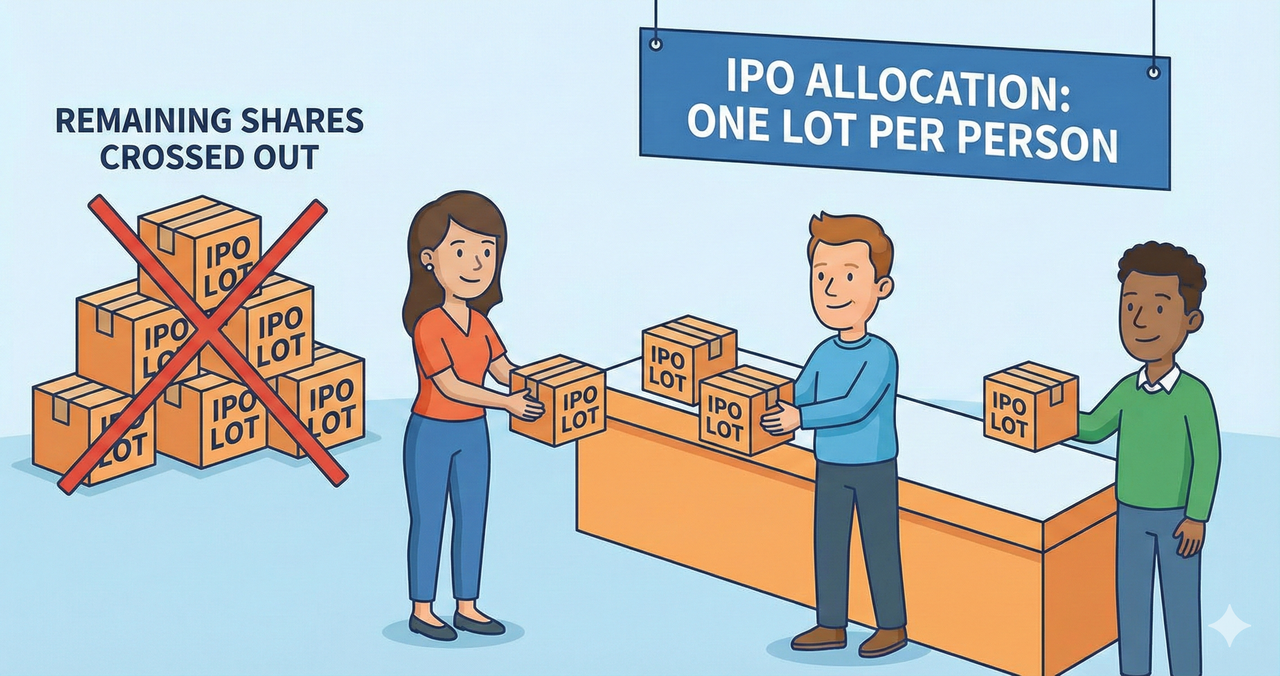
Retail allotment always starts with the minimum lot size.
Example:
- Lot size: 15 shares
- Retail quota: 1,50,000 shares
👉 Maximum 10,000 retail investors can receive shares
👉 Even if you apply for multiple lots, the system first tries to allot only 1 lot per investor
Extra lots are allotted only if shares remain, which rarely happens in popular IPOs.
Does Applying for Multiple Lots Increase Chances?
❌ No — this is the biggest myth in IPO investing
Applying for:
- 1 lot = same chance
- 5 lots = same chance
Why?
Because the lottery is done on applications, not on the number of shares applied.
The only benefit of multiple lots is:
- Higher capital deployment if allotted
- NOT higher allotment probability
To understand the basics better, you can also read our beginner guide on
What is an IPO?
Real-Life Example: LIC IPO
LIC was one of India’s largest IPOs:
- Massive brand trust
- Huge retail participation
- Oversubscription in multiple categories
Despite this, a large number of retail investors did not receive allotment due to:
- Extremely high number of applications
- Limited retail quota
This clearly proves:
IPO size or popularity does not guarantee allotment
Role of Registrar in IPO Allotment
IPO allotment is handled by the registrar, not brokers or stock exchanges.
Popular registrars include:
- KFin Technologies
- Link Intime
- Bigshare Services
Registrar responsibilities:
- PAN & demat verification
- Removal of duplicate applications
- Running the computerized lottery
- Finalizing the allotment list
Brokers only collect applications — they do not influence allotment.

How to Check IPO Allotment Status
You can check your IPO allotment status through multiple ways:
- Registrar website
- NSE or BSE website
- Your broker’s app
- GAINIPO’s dedicated allotment page
👉 Check live and past IPO allotment results here:
IPO Allotment Status
Status usually shows:
- Allotted / Not Allotted
- Number of shares credited
- Refund initiation details
Live Subscription & Demand Tracking
Every IPO page on GAINIPO shows live subscription data, updated category-wise:
- Retail
- HNI
- QIB
Tracking subscription trends helps you understand demand and manage expectations before allotment.
For sentiment and listing expectations, regularly track:
Live GMP Today
How to Improve IPO Allotment Chances (Practically)
While the lottery system cannot be controlled, you can still avoid common mistakes:
✔️ Apply early to avoid technical failures
✔️ Use one PAN = one application only
✔️ Avoid duplicate demat or UPI errors
✔️ Prefer less-hyped IPOs for better probability
✔️ Track live subscription data before applying
Smart IPO investing is about probability management, not blind luck.
Conclusion
IPO allotment is not about luck — it is about math, demand, and probability.
- Oversubscription reduces chances
- Applying for more lots doesn’t help
- Every retail investor gets equal treatment
Understanding this process saves frustration and helps you apply smarter, not emotionally.
At GAINIPO, our goal is simple:
👉 Make IPO investing transparent, logical, and retail-friendly — from GMP to allotment and beyond.