

Book Building Process Explained: How IPO Price Band Is Decided in India
Book Building Process Explained: How IPO Price Band Is Decided in India
Introduction
Have you ever wondered:
“IPO ka price band kaun decide karta hai?”
“₹300–₹320 likha hota hai, final price kaise fix hota hai?”
This confusion is very common among retail investors.
The answer lies in the Book Building Process — the most important pricing mechanism used in Indian IPOs today.
In this guide, we’ll explain how the IPO price band is decided, how bidding works, and how the final issue price is fixed — in simple language with real-world logic.
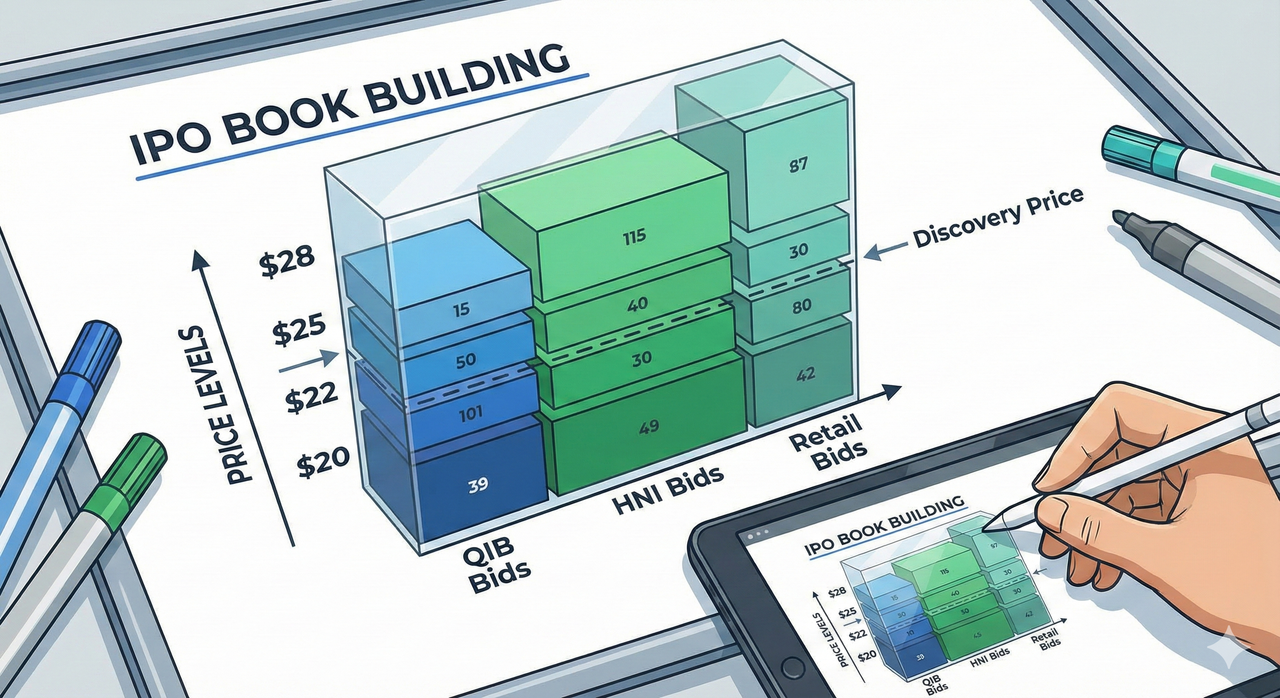
What Is the Book Building Process?
The Book Building Process is a method used to discover the final IPO price based on investor demand.
Instead of fixing one price in advance, the company:
- Sets a price band
- Collects bids from investors at different prices
- Analyzes demand
- Decides the final issue price
Most mainboard IPOs in India follow the book building route.
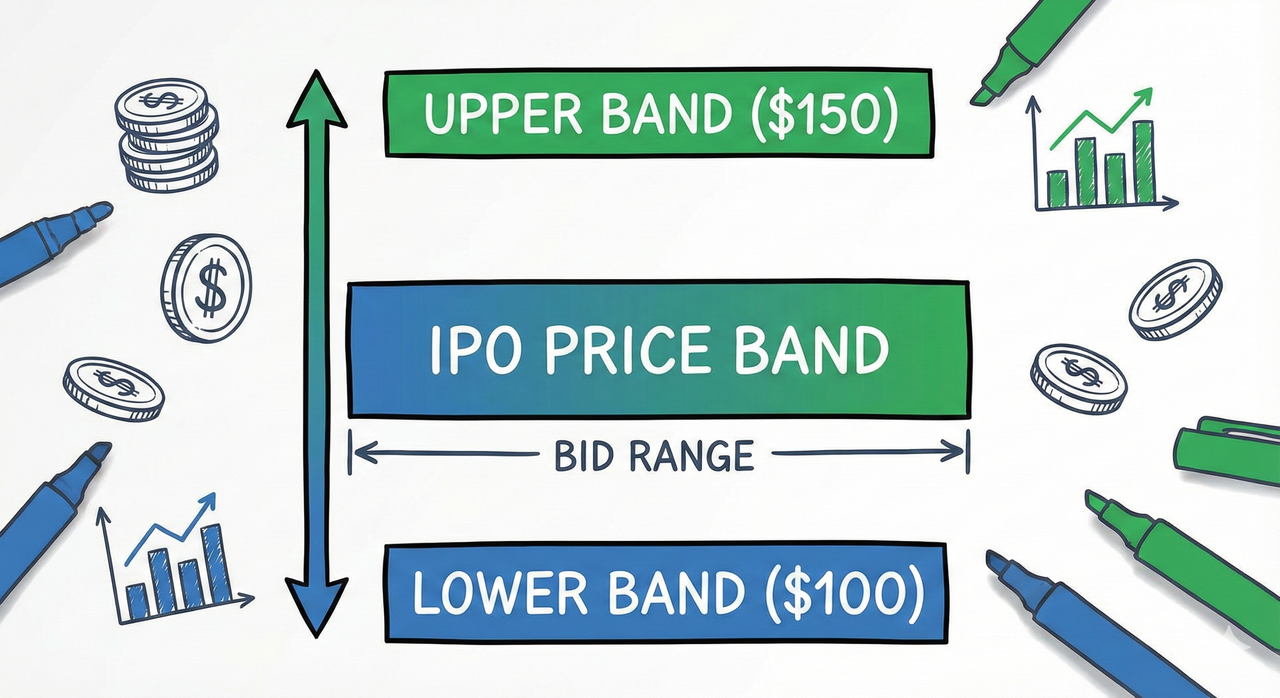
What Is an IPO Price Band?
A price band is the range within which investors can place bids.
Example:
- Lower Band: ₹300
- Upper Band: ₹320
Investors can bid at:
- ₹300
- ₹305
- ₹310
- ₹315
- ₹320
(or any price within the band, depending on bid multiples)
Why Companies Use a Price Band Instead of One Price
Price band helps companies:
- Understand investor demand
- Avoid underpricing
- Avoid overpricing
- Let the market participate in price discovery
For investors, it provides flexibility and transparency.
How Bidding Works in Book Building IPOs
During the IPO window:
- Retail, HNI, and QIB investors place bids
- Each bid includes:
- Price
- Quantity (lots)
- All bids are recorded electronically
This creates a demand book — hence the name book building.
Cut-Off Price Explained (Retail Investors)
Retail investors often see an option called “Cut-Off”.
What does Cut-Off mean?
When you select Cut-Off:
- You agree to buy shares at the final issue price
- You don’t specify a price
- Your bid remains valid even if price is fixed at upper band
👉 This is the recommended option for retail investors.
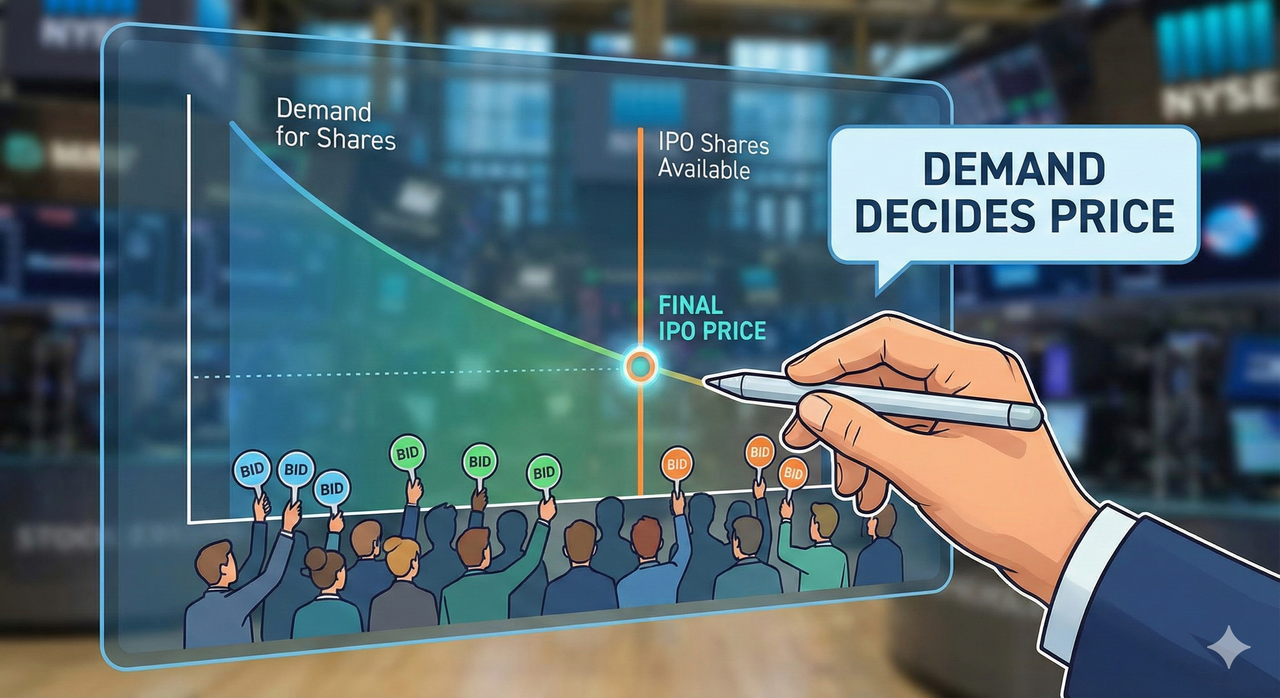
How Final IPO Price Is Decided
After the IPO closes:
- Demand is analyzed at each price level
- The price where maximum shares can be allotted is chosen
- This becomes the final issue price
This price is usually:
- At or near the upper band for strong IPOs
- Near lower band for weak demand IPOs
You can track market sentiment during this phase using
Live GMP Today.
Role of QIBs in Price Discovery
QIBs (mutual funds, institutions) play a major role because:
- They place large bids
- Their demand reflects valuation confidence
- Strong QIB demand often pushes price to upper band
This is why IPOs with weak QIB subscription are considered risky.
Book Building vs Fixed Price IPO
| Feature | Book Building | Fixed Price |
|---|---|---|
| Price flexibility | Yes | No |
| Price discovery | Market-driven | Pre-decided |
| Transparency | High | Low |
| Used in | Mainboard IPOs | Mostly SME IPOs |
To understand the basics better, read
What is an IPO?
Real-Life Example: Strong Book Building IPO
In many successful IPOs:
- Price band is fully subscribed at upper end
- QIB portion fills quickly
- GMP remains strong
This results in:
- Upper band pricing
- Healthy listing gains
Tracking live subscription data on each IPO page on GAINIPO helps investors understand this in real time.
Common Mistakes Retail Investors Make
❌ Bidding below cut-off unnecessarily
❌ Ignoring QIB subscription
❌ Assuming lower price = higher allotment chance
❌ Applying without checking demand trends
Remember: all retail allotment is lottery-based, not price-based.
You can later check your result on
IPO Allotment Status.

How Book Building Impacts Listing Gains
Strong book building usually leads to:
- Upper band pricing
- Positive market sentiment
- Higher listing expectations
Weak book building may lead to:
- Lower pricing
- Flat or discounted listing
For deeper understanding of pre-listing signals, also explore
Pre-IPO Shares.
Conclusion
The book building process is the heart of IPO pricing in India.
- Price band allows market-driven valuation
- Cut-off option protects retail investors
- QIB demand signals strength
- Final price reflects collective confidence
Understanding this process helps you:
✔️ Avoid confusion
✔️ Bid correctly
✔️ Manage expectations
✔️ Invest smarter
At GAINIPO, our goal is to simplify IPO concepts so retail investors never feel lost again.